This journal records the process of researching the appearance and disappearance of form in photographic work.
It follows questions that emerge through observation, changes in the visibility of form, and discoveries that arise from examining how light, shadow, border and space affect the image.
The journal does not explain the meaning of the works. It records the path of observation: how form becomes visible, how it disappears, what conditions hold its presence, and what new questions emerge through the research.
Each entry is a step in an ongoing investigation.
ENTRY No. 17 — SPACE
13.10.2026
QUESTION:
Is a visible gap necessary for the perception of space?
OBSERVATION:
A spatial relation can be perceived between forms even when there is no visible gap between them.
CONCLUSION:
The perception of space does not require a visible distance or empty interval.
ENTRY No. 16 — SPACE
13.10.2026
QUESTION:
What creates a spatial relation between forms?
OBSERVATION:
A spatial relation arises between the form and another surface. One is positioned in relation to the other.
CONCLUSION:
For space to be perceived, what matters is not only the presence of a form or a surface, but their position in relation to each other.
ENTRY No. 15 — SPACE
06.10.2026
QUESTION:
Can an area be spatially readable without having its own tonal distinction?
OBSERVATION:
An area itself has almost no tonal distinction, but the form organizes it in such a way that it begins to be perceived as a separate part of the space.
CONCLUSION:
Spatial readability can arise not from tonal difference, but from the way an area is organized by the form.
ENTRY No. 14 — SPACE
06.10.2026
QUESTION:
How does space become accessible to the gaze?
OBSERVATION:
In the image, space begins to be perceived through the relation of one area to another.
CONCLUSION:
To perceive space, it is enough for the gaze to distinguish relationships between areas.
ENTRY No. 13 — BORDER
06.10.2026
QUESTION:
Relative to what does a border become a border?
OBSERVATION:
A border becomes distinguishable only in relation to what lies on the other side of it.
CONCLUSION:
A border does not exist by itself. It defines the limit of one area in relation to another.
ENTRY No. 12 — BORDER
23.09.2026
QUESTION:
Is contrast itself a border?
OBSERVATION:
Strong contrast can make a border noticeable, but contrast alone does not create a border.
CONCLUSION:
A border arises from a difference between areas, but it cannot be reduced to contrast itself.
ENTRY No. 11 — BORDER
23.09.2026
QUESTION:
Can a border remain accessible to the gaze when the form itself is only weakly visible?
OBSERVATION:
The border remains accessible to the gaze even when the form itself is only weakly visible.
CONCLUSION:
Recognizing a border does not require the form itself to be clearly visible. The border allows its limit to be distinguished even when the form is only weakly visible.
ENTRY No. 10 — BORDER
23.09.2026
QUESTION:
What happens to the border when it becomes invisible in a particular area?
OBSERVATION:
In some areas, the border disappears or becomes difficult to see, but the form continues to be perceived as bounded.
CONCLUSION:
A border can be locally invisible and still continue to function as the limit of the form.
ENTRY No. 9 — BORDER
20.09.2026
QUESTION:
What makes this part of the image a border for the gaze?
OBSERVATION:
A border in an image does not necessarily appear as a line. It can be a transition zone, an area of difference, or a broken contour.
CONCLUSION:
The perception of a border does not require a single clear line. The gaze can recognize the limit between two areas even when that limit has an extent or is interrupted.
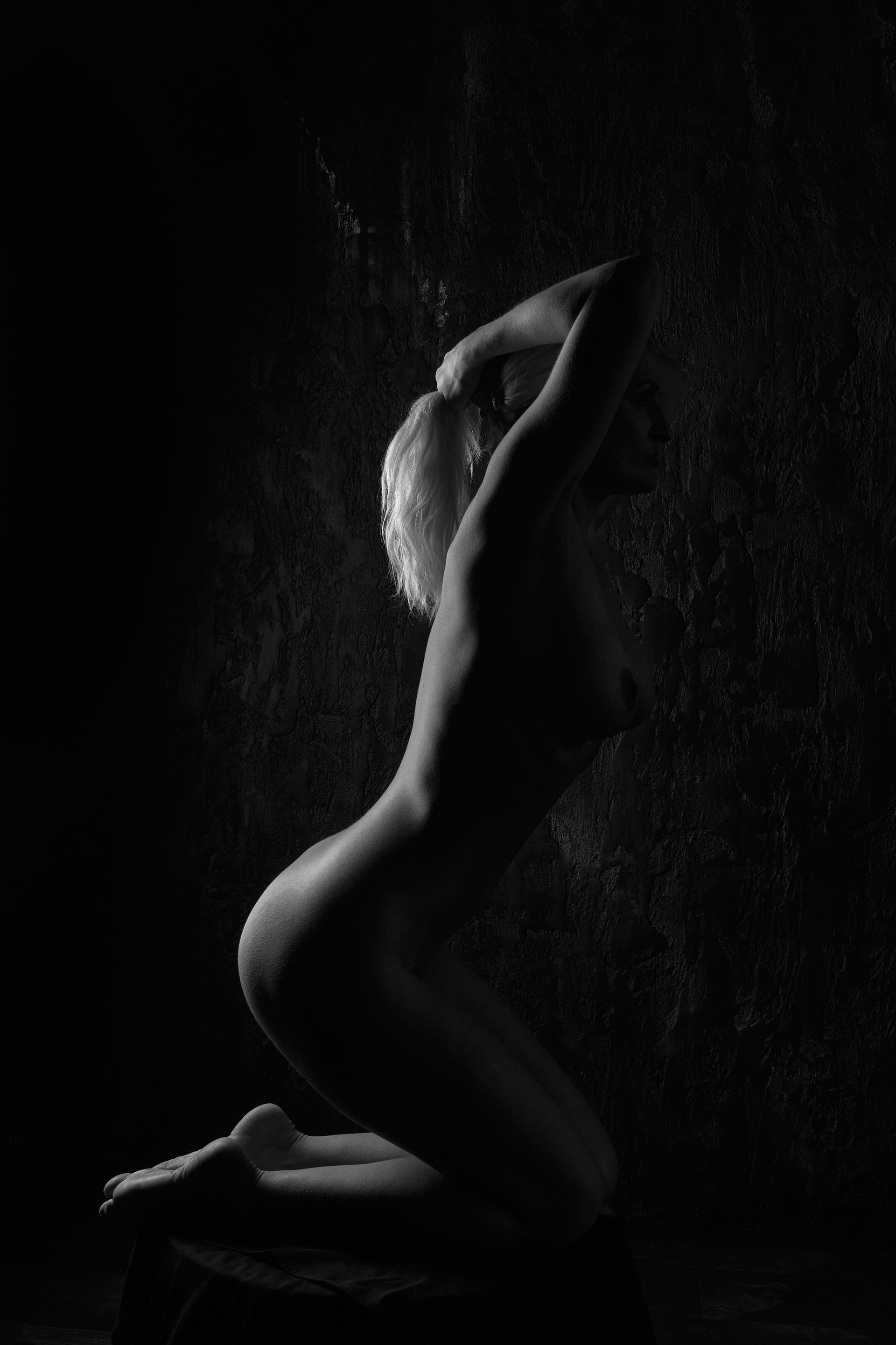
ENTRY No. 8 — SHADOW
20.09.2026
QUESTION:
What happens to the space of the form when it is in Shadow?
OBSERVATION:
The body is in Shadow. Shadow organizes the surrounding space, while Light passes along the form and creates a thin contour that conveys the direction of tension and movement.
CONCLUSION:
Shadow can organize the space around the form and, in doing so, allow Light to convey its movement.
ENTRY No. 7 — SHADOW
20.09.2026
QUESTION:
What happens to the form when Shadow absorbs its surface?
OBSERVATION:
Almost the entire body is immersed in darkness. The surface ceases to be readable, and the form almost disappears.
CONCLUSION:
Shadow can absorb the surface of the form to such an extent that the form disappears while retaining almost no visible signs.
ENTRY No. 6 — SHADOW
17.09.2026
QUESTION:
What happens to the form when part of it enters Shadow?
OBSERVATION:
The lower part of the body enters Shadow and ceases to be visible. The remaining part of the form becomes more distinct in relation to the surrounding space.
CONCLUSION:
Shadow not only hides part of the form, but also emphasizes what remains visible. Shadow emphasizes the form by hiding part of it.
ENTRY No. 5 — LIGHT
17.09.2026
QUESTION:
What happens when the form has already appeared, but Light leaves it only partially visible?
OBSERVATION:
Separate lines of Light are distributed across the form. Areas of darkness remain between them, but the form does not disappear completely.
CONCLUSION:
Even fragmented Light is enough to prevent the form from disappearing completely. Light holds the form against disappearance.

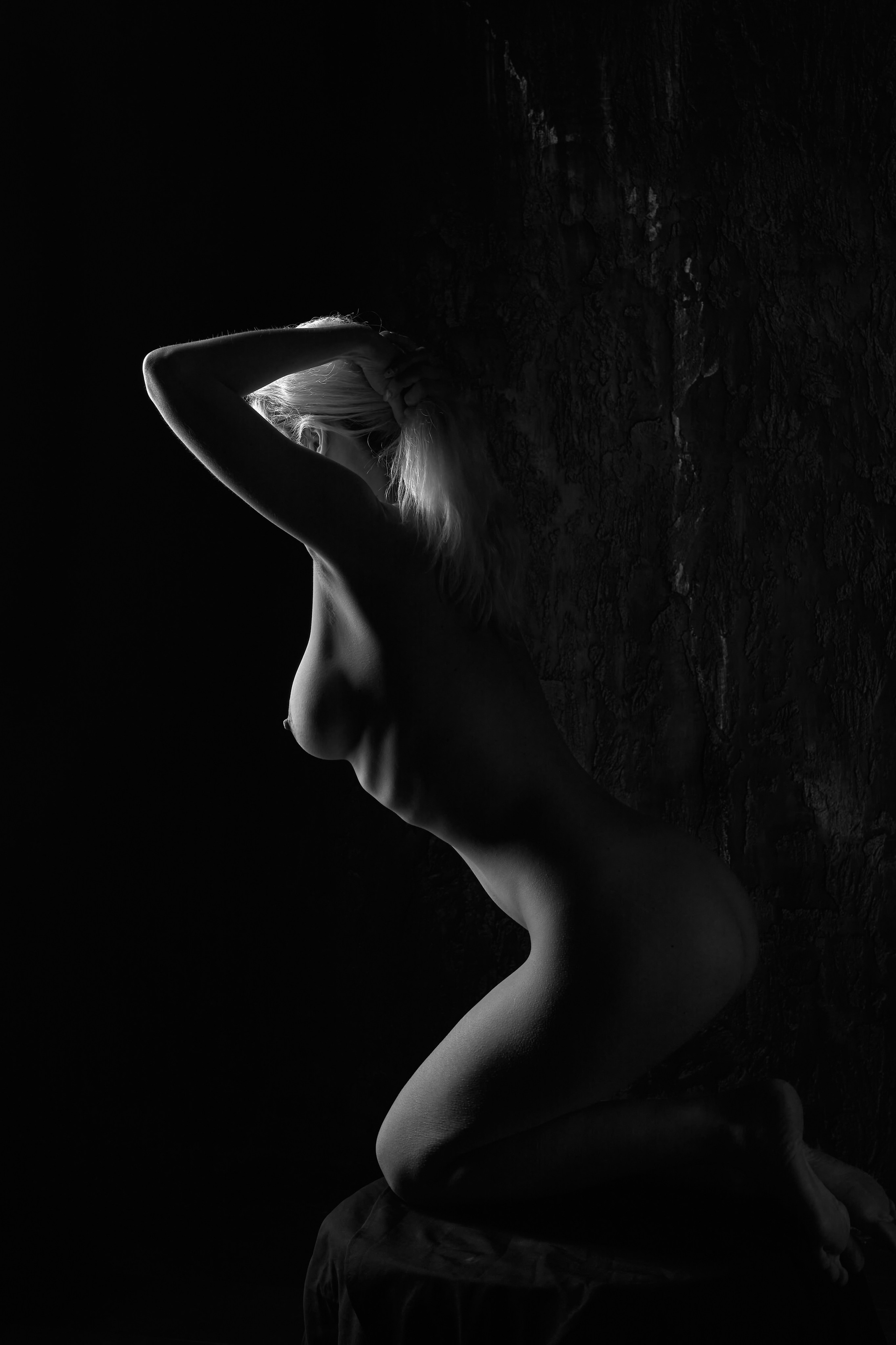
ENTRY No. 4 — LIGHT
13.09.2026
QUESTION:
How does Light direct attention within the form?
OBSERVATION:
Light illuminates separate parts of the body, leaving the others in darkness. The gaze moves from one illuminated part to another.
CONCLUSION:
Light can select which parts of the form become objects of attention. It directs attention by highlighting separate parts of the form.
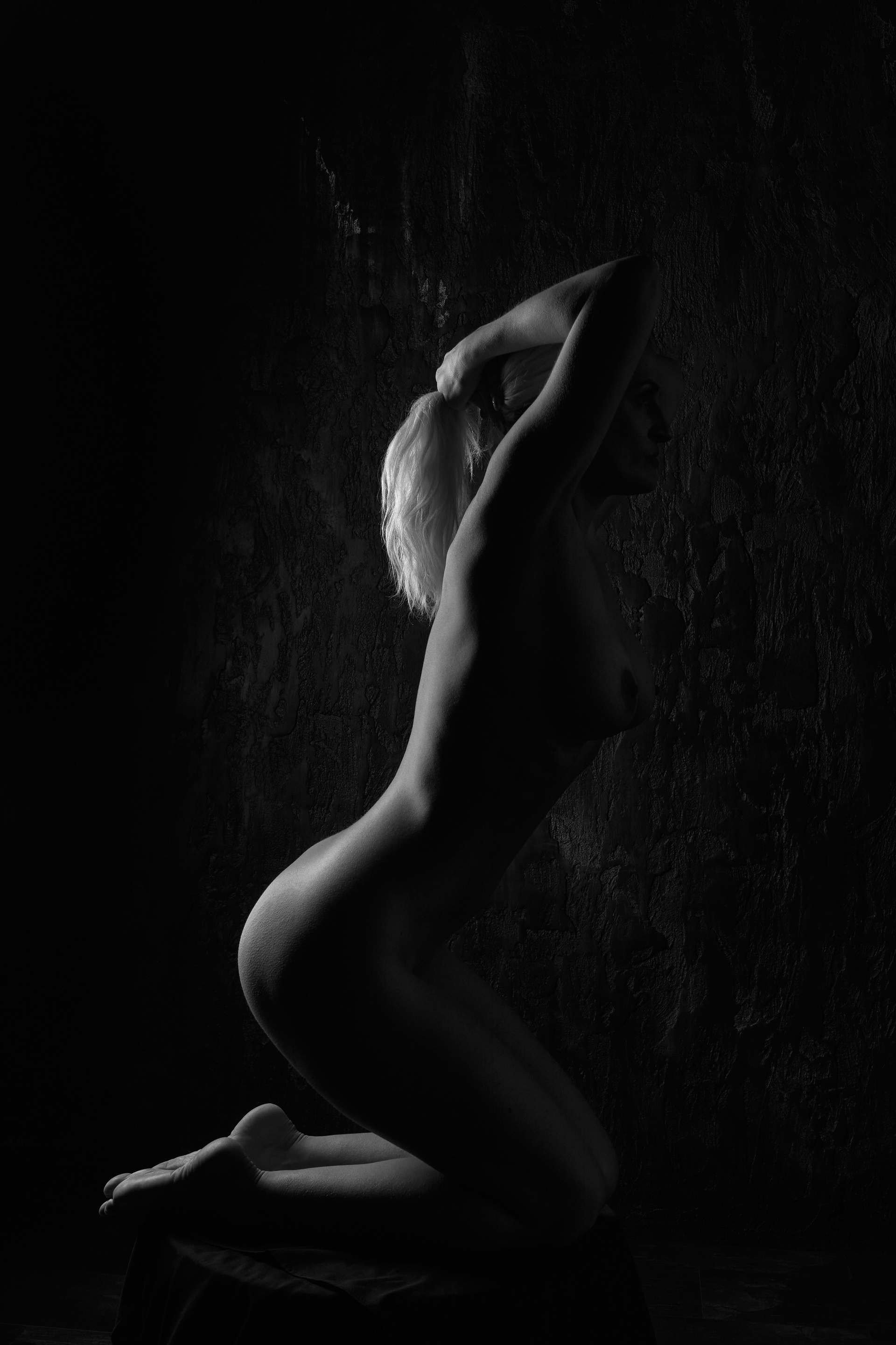
ENTRY No. 3 — LIGHT
13.09.2026
QUESTION:
What happens to the form when Light not only reveals it, but also directs the movement of the gaze?
OBSERVATION:
A thin line of Light passes across the form and establishes a direction for the gaze to follow.
CONCLUSION:
Light can lead the gaze through the form. It establishes the direction in which the gaze moves within it.
ENTRY No. 2 — LIGHT
10.09.2026.
QUESTION:
Under
what conditions does form become accessible to the gaze?
OBSERVATION:
Light
leaves visible only a few signs of the form. This is enough to
recognize it, although most of the form remains hidden.
CONCLUSION:
The
form does not need to be seen in its entirety to be recognized. Light
leaves only those signs of the form that are sufficient for
recognition.
ENTRY No. 1 — LIGHT
10.09.2026
QUESTION:
Under what conditions does form become accessible to the gaze?
OBSERVATION:
In almost complete darkness, Light leaves a small fragment of the form visible. The rest of the body and the surrounding space almost disappear.
CONCLUSION:
A minimal visible fragment is enough for the form to appear to the gaze. Light extracts the form from darkness through a minimal visible fragment.