
This journal records the process of researching the conditions of emergence of a work.
It follows questions that appear during the creation of photographs, observations made through practice, and discoveries that arise from working with artistic instruments.
The journal does not explain the meaning of the works. It records the path of observation: how an image changes, what new possibilities appear, and what questions lead to further research.
Each entry is a step in an ongoing investigation.
ENTRY No. 8
28.07.2026.
QUESTION:
What carries the connection between the two images?
OBSERVATION:
The connection between the images becomes apparent through the process of perception. However, the observations available are not sufficient to determine what exactly carries this connection.
CONCLUSION:
New photographic experiments are required to answer this question.
ENTRY No. 7
25.07.2026.
QUESTION:
If a connection remains between the images after they are divided, what form does this connection take?
OBSERVATION:
While viewing the photograph, the gaze continually moves from one image to the other. Neither is perceived as completely independent. Each repeatedly returns attention to the other.
CONCLUSION:
The division of the image does not destroy their unity. After the division, the connection becomes visible through the movement of the gaze between the two images.
ENTRY No. 6
22.07.2026.
QUESTION:
What form does this connection take?
After the image is divided, a connection remains between the two
images.
OBSERVATION:
While viewing the photographs, it becomes clear that the reflection is never perceived as completely separate from the original image. Even when the viewer’s attention shifts to the reflection, the gaze continues to return to the body and back again. This creates a constant movement of perception between the two images.
CONCLUSION:
The mirror does not simply divide the images. At the same time, it creates a stable connection between them, through which each image continues to be perceived in relation to the other.
ENTRY No. 5
17.07.2026.
QUESTION:
How do the original image and the reflection exist in relation to one another?
OBSERVATION:
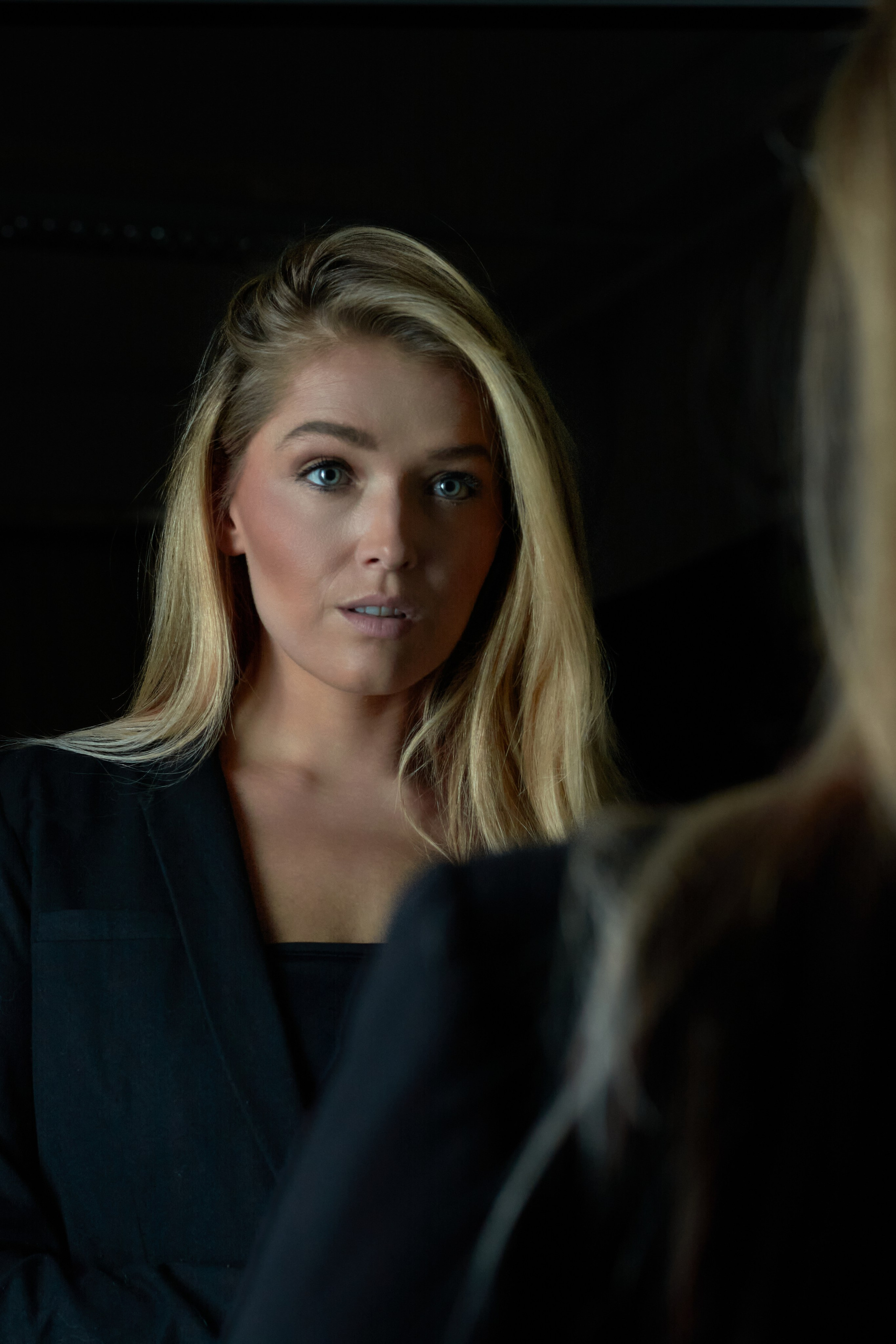
I noticed that the figure and its reflection are constantly perceived together. It is impossible to look at only one of the images for long — the gaze continually moves from one to the other.
CONCLUSION:
The original image and the reflection begin to function as a single whole.
OBSERVATION:
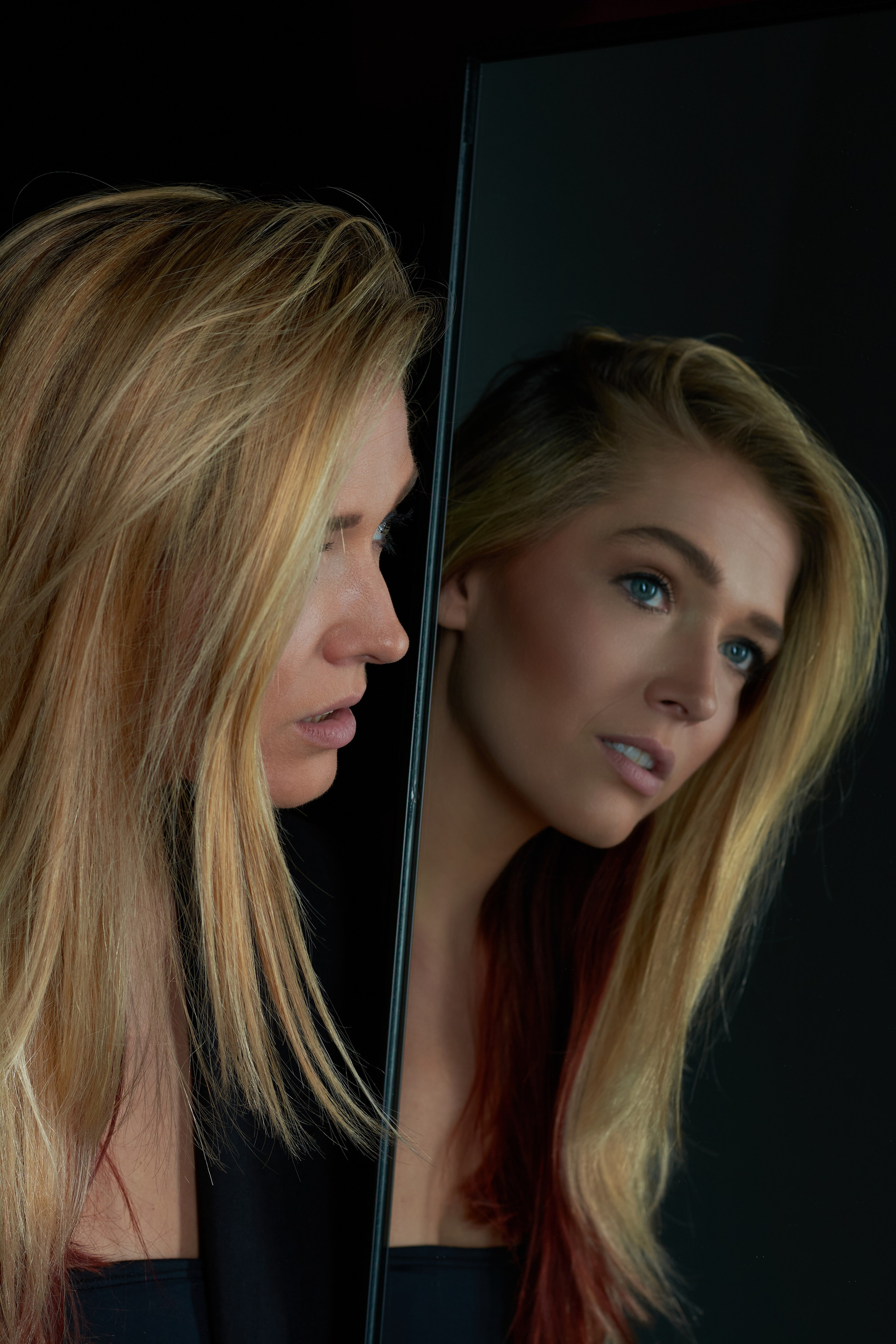
The mirror separates the two images, but it does not break the connection between them. They exist on opposite sides of the mirror, yet they continue to be perceived together.
CONCLUSION:
The mirror separates the images while preserving the connection between them.
OBSERVATION:
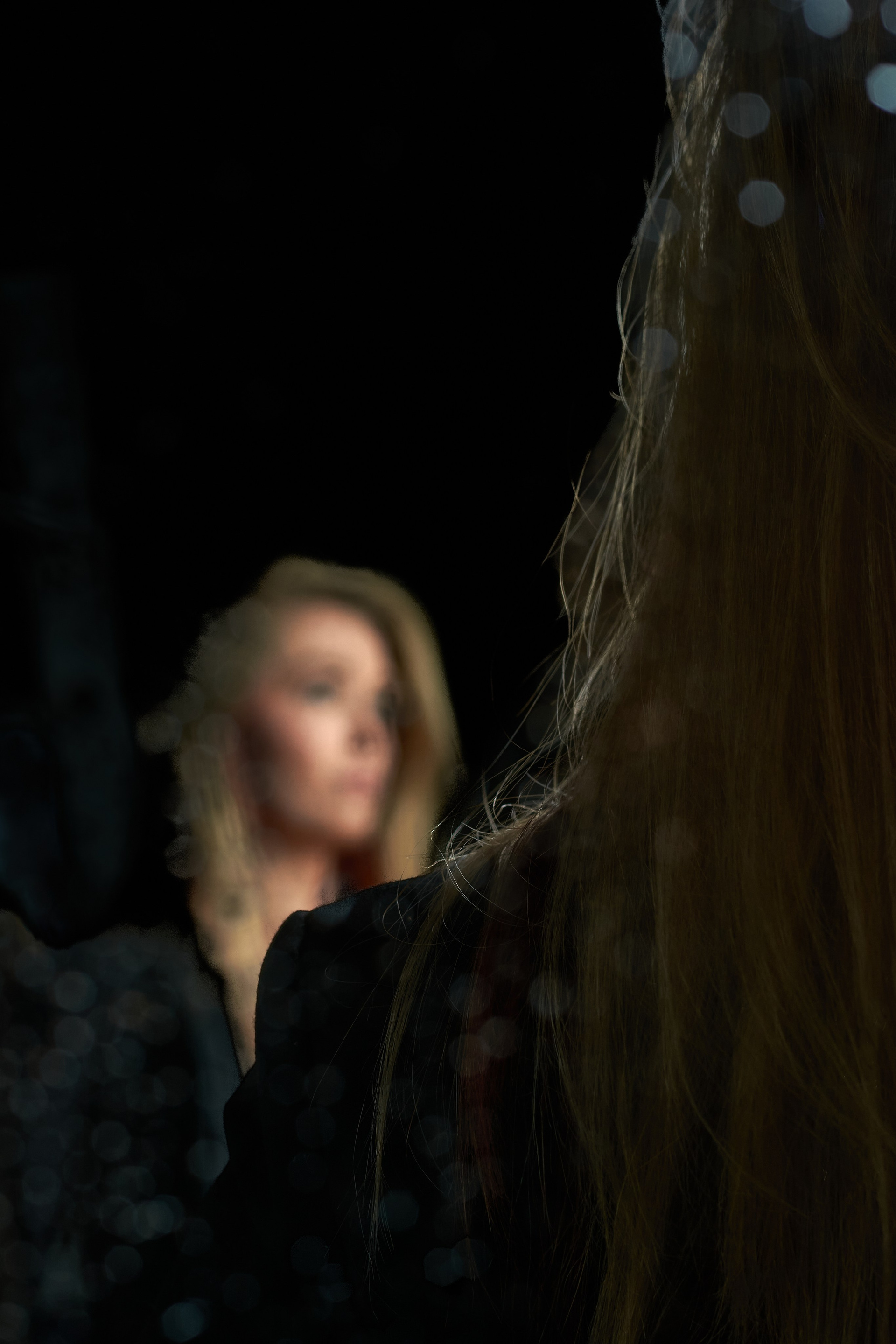
The images differ from one another. One is closer, the other farther away. One is blurred, while the other is perceived differently. Yet despite these differences, the gaze still connects them.
CONCLUSION:
Even when the images differ significantly from one another, their relationship remains.
ENTRY No. 4
15.07.2026.
QUESTION:
What happens to the original image after the reflection becomes the primary image?
PROVISIONAL CONCLUSION:
The original image does not disappear. Instead, it takes on a new function in relation to the reflection.
The sequence therefore maintains a clear cause-and-effect logic:
- The mirror creates two images.
- The reflection becomes an independent image.
- Selective focus determines which of the images becomes the primary one.
- The role of the second image within the composition changes.
Note.
At
this point, the research moves towards questions of artistic
decision-making, the structure of relationships between images, and
the formation of artistic intent. These questions require separate
consideration and fall outside the scope of the journal’s
observational entries. Their analysis will be presented in the
research appendix “The Structure of Relationships
Between Images.”
ENTRY No. 3
12.07.2026.
QUESTION:
What allows the reflection to become the primary image?
At this point, the research moves from the study of the mirror to the study of the interaction between artistic instruments.
OBSERVATION:
While reviewing the photographs, I noticed that the reflection attracts the viewer’s attention first. The original image remains within the frame, but it is the reflection that becomes the visual centre of the composition. This is achieved by keeping the reflection in focus while intentionally placing the body out of focus.
CONCLUSION:
The mirror merely creates the possibility for two images to exist. Which of them becomes the primary image for the viewer is determined by another artistic instrument — selective focus. It directs the viewer’s attention and establishes the compositional centre of the work.
ENTRY No. 2
10.07.2026.
QUESTION:
What happens to an image when it splits into two?
OBSERVATION:
While reviewing the photographs, I noticed that the body was no longer perceived as a single whole.
CONCLUSION:
The mirror divides the image of the body into separate elements. The reflection begins to be perceived as an independent image.
ENTRY No. 1
10.07.2026.
QUESTION:
What does a mirror do to an image?
OBSERVATION:
After the shoot, I noticed that the image had split into two.
CONCLUSION:
As an artistic instrument, the mirror creates two images — the original image and its reflection.